Navigating Imperfection : Finding Wabi Sabi_ The boat Studio

Updated: Jun 17
How Two Boats Taught Me Resilience, Confidence and the Beauty of Imperfection
When life feels far from perfect, sometimes the most unexpected things become a source of healing and growth. For me, that unexpected thing was a boat. Not a luxury yacht or a sleek cruiser — but a dilapidated canal boat. An imperfect vessel that arrived at a time when I was struggling to find my way.
It didn’t offer comfort or ease. It didn’t wrap me in softness or stability. Instead, it challenged me, tested me, and ultimately taught me lessons I never saw coming.
That first boat changed my life. And it introduced me to the Japanese philosophy of Wabi Sabi — the art of finding beauty in imperfection, impermanence, and simplicity.
The Beginning of an Unexpected Journey


I didn’t buy my first boat because life was going well. In fact, it was the opposite. I was in a dark place, trying to rebuild myself and figure out what came next. The boat found me when I needed it most, even though I didn’t realise it at the time.
Living on that boat was far from easy. Cold winter nights with no heating. No proper bathroom. Late‑night trips to canal taps to wash my hair and have a pidgeon wash. Moments where I questioned everything and wondered what on earth I’d done.

But despite the discomfort, that boat gave me something invaluable: resilience. It showed me that life doesn’t have to be perfect to be meaningful or beautiful.

Lessons From Imperfection
The boat was flawed. Weathered. Rough around the edges. But instead of seeing those things as problems, I began to see them as character. Every mark told a story. Every crack held history. It didn’t need to be perfect — it just needed a bit of love.
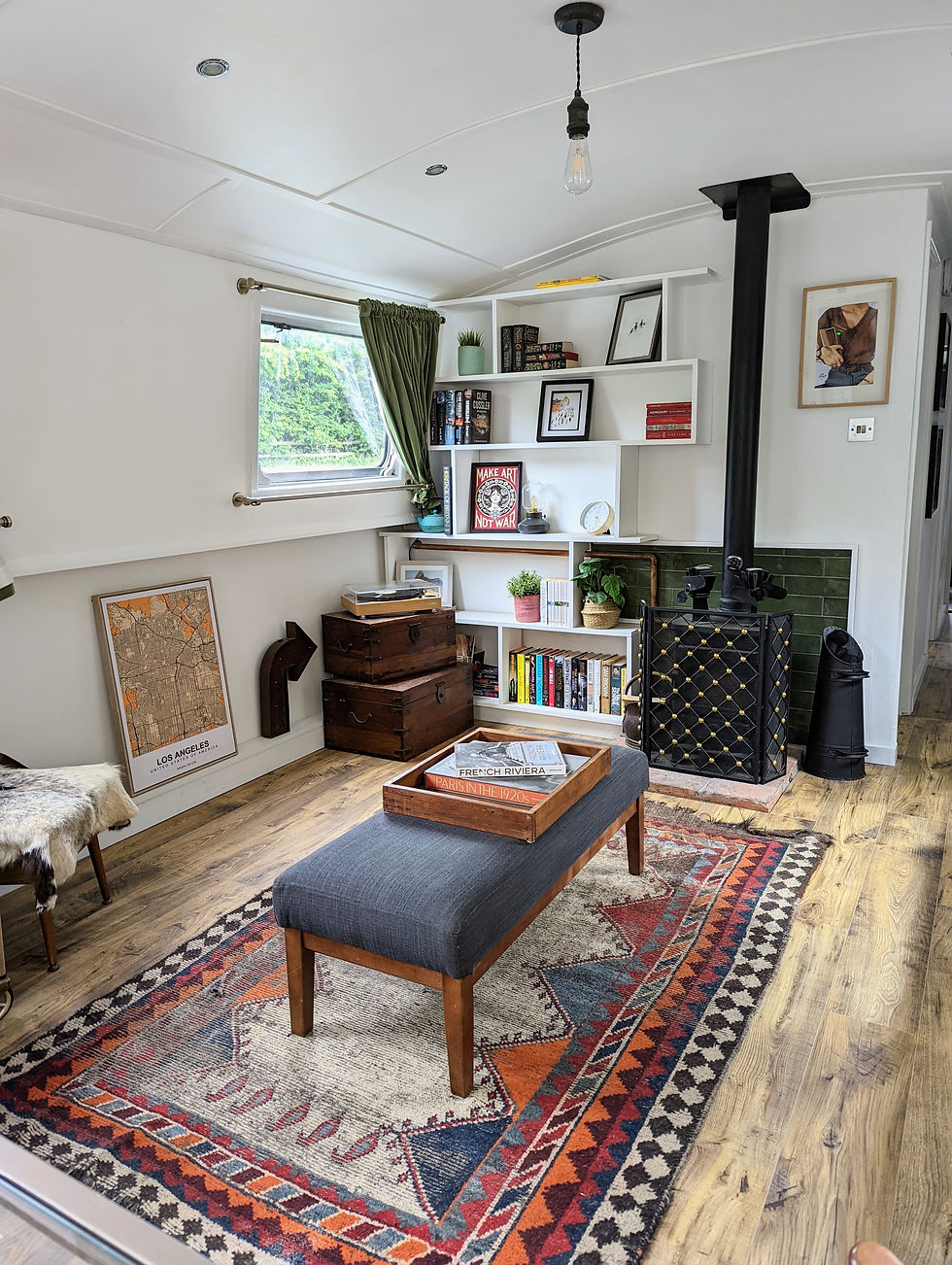
That shift in perspective helped me understand Wabi Sabi.
Wabi Sabi embraces imperfection, impermanence, and simplicity. It celebrates the marks, cracks, and weathering as elements that add depth and beauty.
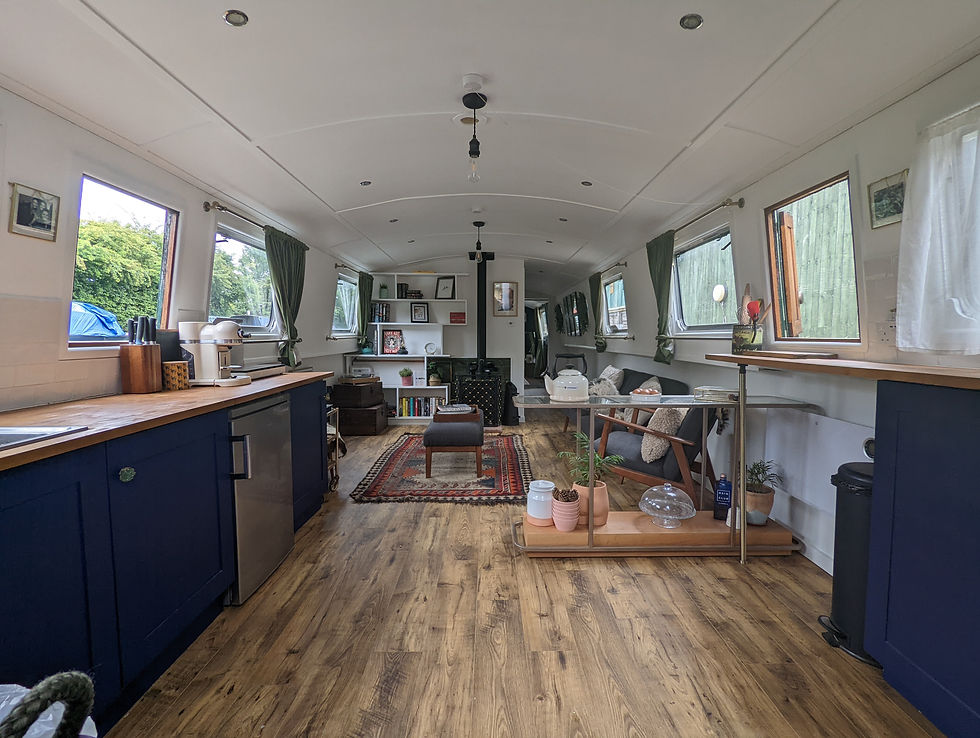
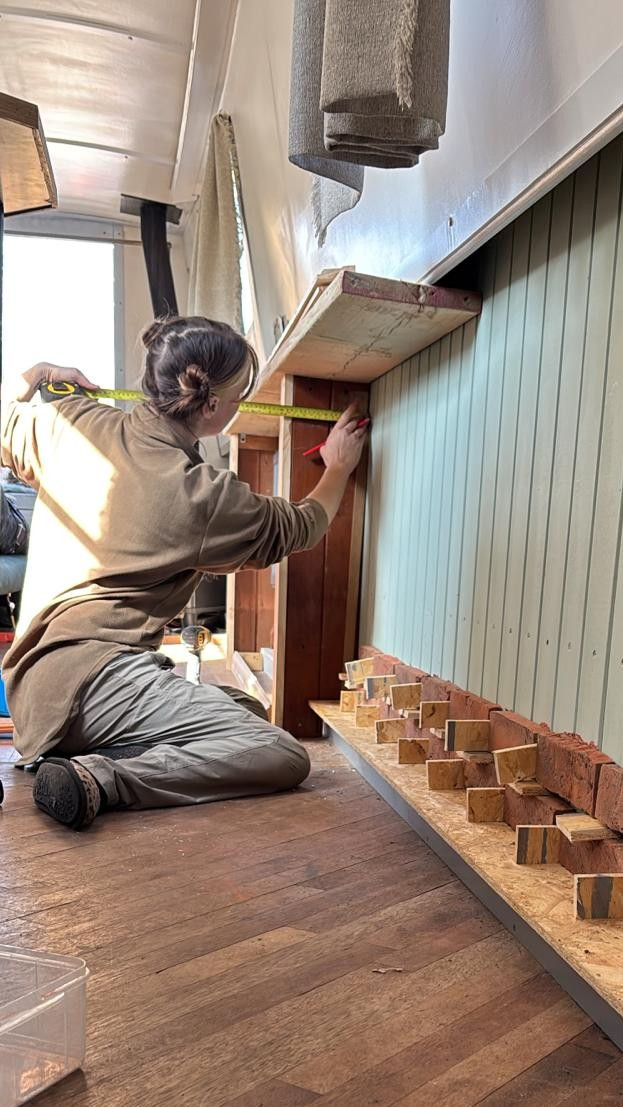
As I rebuilt the boat, I realised I was rebuilding myself too.
The Second Boat: Building Confidence


After the first boat taught me resilience, my second boat taught me confidence. I knew more by then, but there were still mistakes, doubts, and lessons. That’s the thing about boats — and life — every chapter teaches you something new.
Looking back, I can see that every part of this journey was leading me somewhere bigger.
Kintsugi: The Art of Golden Repair
Alongside Wabi Sabi, I fell in love with the concept of Kintsugi — the Japanese art of repairing broken pottery with gold.
Instead of hiding the cracks, Kintsugi highlights them. Instead of pretending nothing broke, it honours the break. Instead of discarding something damaged, it transforms it into something more beautiful than before.

Kintsugi teaches us that:
Imperfections are part of our story
Healing can make us stronger
Our cracks can become our most beautiful features
What breaks us can also remake us
It’s a powerful metaphor for resilience — and for the journey I’ve been on.
Creating WABI SABI: A Floating Space of Calm and Community
All of these lessons — resilience, confidence, imperfection, rebuilding — inspired the creation of WABI SABI, a floating wellness studio built on the water.
This isn’t just another boat. It’s a space shaped by lived experience. A space built around healing, simplicity, community, the courage to begin again & wellness.
Thanks to the incredible team at @collingwoodboats, my vision is becoming real. They’re helping create a modified boat that reflects these values and offers a unique, calming experience on the water. Once it’s built, it will come to me — and I’ll take my time fitting it out with intention and care.

What Wabi Sabi Means for All of Us
Wabi Sabi isn’t just a design style. It’s a way of approaching life.
It reminds us that:
Imperfection adds character
Change is constant
Simplicity brings peace
Resilience grows through challenge
Community and connection matter
Healing doesn’t require perfection
These ideas can help anyone who’s rebuilding, recovering, or simply trying to find their way.
Embracing Your Own Journey

If you’re feeling stuck or overwhelmed, consider what imperfection might be trying to teach you. Like my first boat, life’s challenges can be uncomfortable and testing — but they also offer opportunities to grow stronger and discover unexpected beauty.
It’s not about having everything perfect. It’s about appreciating the journey, the marks it leaves, and the person you become along the way.
Your cracks, your weathering, your story — they’re what make you beautifully you.
And This Is Where Accessibility Comes In…
Because once you understand Wabi Sabi — the beauty of real life, real bodies, real stories — you realise something important:
A space built on these values must be accessible. It must welcome everyone exactly as they are.
Which leads into the next part of this story… Why accessibility isn’t an afterthought — it’s the heart of Wabi Sabi.
Why accessibility matters
The accessible part of Wabi Sabi is actually one of the biggest reasons this project means so much.
My dad is an amputee, and I’m lucky enough to have some incredible friends within the amputee community. You would be amazed how many spaces unintentionally exclude people.
Then I had my own little glimpse into that world. After multiple surgeries, time using crutches, mobility aids and needing help myself, I realised how quickly the world changes when your body doesn’t move the way it used to.
Things most people never think twice about suddenly become obstacles. A step. A narrow doorway. A lack of space. A “sorry, we can’t accommodate.” And it’s everywhere.
In the UK there are millions of disabled people, yet so many venues, experiences and wellness spaces still aren’t designed with everybody in mind.
Relaxation, healing, connection and community shouldn’t be luxuries only available if your body fits the building.
That’s why Wabi Sabi is being created differently from the beginning. A floating wellness space built with accessibility considered from day one.
Because Calm AF has never been about creating a perfect space for perfect people. It’s about real humans. Real bodies. Real stories.
Everyone deserves somewhere they can arrive exactly as they are.


Comments